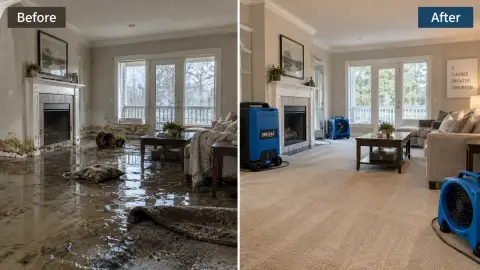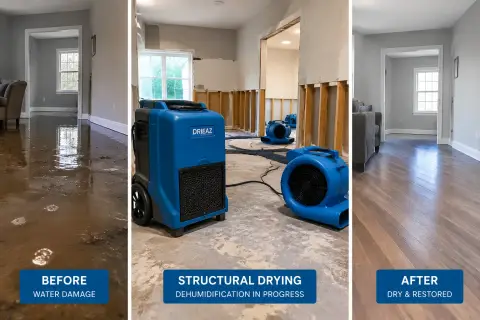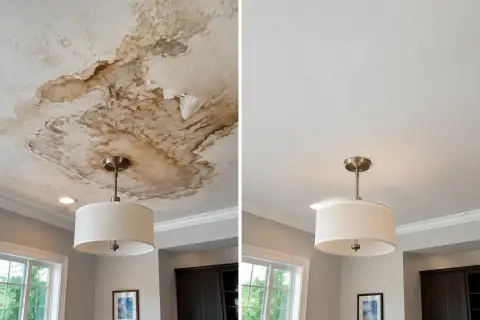
Cape Coral, in Lee County, is a low-lying area built along the water with roughly 195,000 residents. Cape Coral is a planned city with more than 400 miles of canals, more than any other city in the world according to its city government, and it is one of the largest cities in Southwest Florida. Water damage here follows the pattern of the area: canal-front, river-front, and bayfront homes, many close to sea level. When water gets into one of those buildings, the clock starts immediately, because Florida's warm, humid air lets mold begin growing in as little as 24 to 48 hours.
Cape Coral sits only about 7 feet above sea level, so rain, tides, and surge have very little elevation to work against. If you are dealing with a leak, a flooded room, or storm damage in Cape Coral, call (305) 789-7628 any time, day or night. We serve 6 ZIP codes in Cape Coral and nearby communities such as North Fort Myers, Fort Myers, St. James City, and Fort Myers Beach, and we document every job with photos and moisture readings so your insurance claim has what it needs.
Why water damage happens in Cape Coral
Nearly every neighborhood in Cape Coral is built around canals, and a large share of homes sit close to sea level. Hurricane Ian brought several feet of surge into canal-front streets and homes in 2022, and many homes that took water have been rebuilt. Lee County is a mix of barrier islands, canal-cut Cape Coral, and inland Lehigh Acres. Cape Coral alone has hundreds of miles of canals, and a big share of homes sit close to sea level, so a surge or heavy-rain event can put water into living space quickly.
Water damage in Cape Coral usually comes from a short list of causes. These are the ones to watch for:
- Canal overtopping and storm surge, as seen during Hurricane Ian in 2022
- Flooding from heavy rain when canals, rivers, and drainage systems fill faster than they can drain
- High tides and king tides that push water into low streets and yards
- Storm surge that overtops seawalls and enters lower floors and garages
- Rising groundwater and sewer or septic backups when the ground is saturated
Storm and flood history in Lee County
Cape Coral is exposed to the same storm and flood patterns that have affected all of Lee County.
- Hurricane Ian (2022) made landfall near Cayo Costa as a Category 4, destroying homes on Fort Myers Beach, Sanibel, and Pine Island.
- Hurricane Irma (2017) delivered strong winds and heavy rain across Lee County.
- Hurricane Charley (2004) crossed Lee County offshore islands as a Category 4 on its way to Punta Gorda.
Common water damage situations in Cape Coral
Canal water rises after a storm. Cape Coral's hundreds of miles of canals connect to the Caloosahatchee and Gulf. In Ian, surge overtopped seawalls and entered homes through garages and doors.
A home that flooded in Ian has hidden mold. Wall cavities and subfloors that were not fully dried can develop mold months later.
A slab-on-grade home has a supply line failure. Cape Coral homes are almost all slab-on-grade, so leaks under the slab or in the attic are common.
Where we work in Cape Coral
We work throughout Cape Coral, including areas near Cape Coral Yacht Club, Four Mile Cove Ecological Preserve, Sirenia Vista Park, Cape Harbour, and Burrowing Owl Festival.
Neighborhoods and areas we regularly serve include Southwest Cape, Northwest Cape, Cape Harbour, Pelican, Yacht Club area, and Burnt Store.
Crews responding in Cape Coral also cover the surrounding area, including North Fort Myers (about 8 miles northeast), Fort Myers (about 9 miles east), St. James City (about 11 miles southwest), Fort Myers Beach (about 13 miles south), and Sanibel (about 15 miles southwest).
Cape Coral is close to the Caloosahatchee River, Estero Bay, and Pine Island Sound, and that water shapes local risk: tides, rain, and river or canal levels decide how quickly streets and yards flood.
ZIP codes we serve in Cape Coral
- 33904
- 33909
- 33914
- 33990
- 33991
- 33993