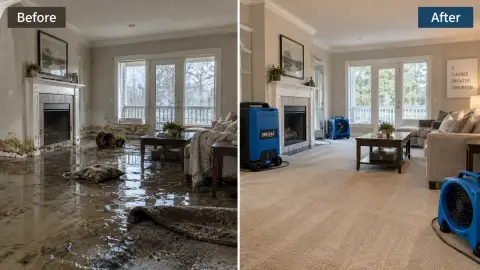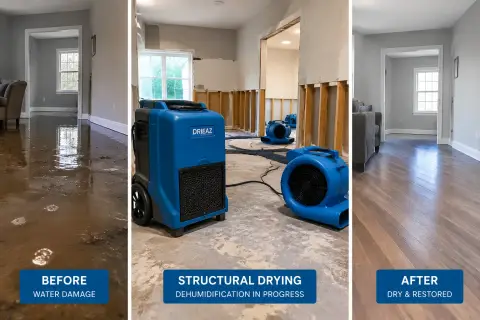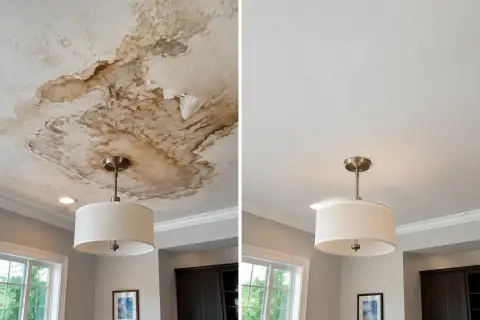
Located in Brevard County, Melbourne is a coastal community of roughly 85,000 residents. Melbourne is a Brevard County city on the Indian River Lagoon, home to Florida Institute of Technology and the Eau Gallie Arts District. Water damage here follows the pattern of the area: homes and condos close to the water, many raised on pilings and exposed to salt air. When water gets into one of those buildings, the clock starts immediately, because Florida's warm, humid air lets mold begin growing in as little as 24 to 48 hours.
Melbourne sits roughly 13 feet above sea level. If you are dealing with a leak, a flooded room, or storm damage in Melbourne, call (305) 789-7628 any time, day or night. We serve 5 ZIP codes in Melbourne and nearby communities such as Indialantic, Melbourne Beach, Malabar, and Satellite Beach, and we document every job with photos and moisture readings so your insurance claim has what it needs.
Why water damage happens in Melbourne
Brevard is a long, narrow county built around barrier islands, lagoons, and rivers, so a lot of homes sit close to salt or brackish water. Fay in 2008 proved that heavy rain alone, without a hurricane, can flood inland Melbourne neighborhoods.
Every part of Florida has its own way of letting water in. In Melbourne, these are the problems we see and plan for most often:
- Heavy rain flooding like Tropical Storm Fay in 2008, which dropped roughly two feet of rain around Melbourne
- High indoor humidity that keeps materials damp and encourages mold after even a small leak
- Condo and high-rise leaks that travel between units, especially through balconies and shared risers
- Storm surge and wind-driven rain that push water in through doors, garages, and damaged windows
- Salt air that corrodes plumbing fittings, AC coils, and roof fasteners, leading to slow leaks
Storm and flood history in Brevard County
Recent history shows why homeowners in Melbourne should not wait to act when water gets inside.
- Hurricane Ian (2022) raised the St. Johns River and flooded low-lying areas of central Brevard.
- Hurricane Nicole (2022) eroded beaches and flooded coastal streets along the barrier islands.
- Hurricane Matthew (2016) ran close along the coast and brought surge and beach erosion.
- Tropical Storm Fay (2008) stalled and dropped roughly two feet of rain across the Melbourne area.
Common water damage situations in Melbourne
Extreme rain floods an inland neighborhood. Tropical Storm Fay in 2008 dropped about two feet of rain around Melbourne, flooding areas far from the coast.
A barrier-island or lagoon-front home has salt-air corrosion. Homes near the Indian River Lagoon and the Atlantic face corrosion of plumbing and AC coils.
A Viera or Suntree home has an AC overflow. Newer subdivisions have attic air handlers with condensate lines that clog.
Where we work in Melbourne
We work throughout Melbourne, including areas near the Florida Institute of Technology, the Eau Gallie Arts District, and Wickham Park.
Neighborhoods and areas we regularly serve include Downtown Melbourne, Eau Gallie, Suntree, and Viera.
Crews responding in Melbourne also cover the surrounding area, including Indialantic (about 2 miles east), Melbourne Beach (about 3 miles east), Malabar (about 6 miles southeast), Satellite Beach (about 6 miles north), and Palm Bay (about 7 miles southwest).
Melbourne is close to the Indian River Lagoon, the Banana River, and the St. Johns River, and that water shapes local risk: saltwater, wind, and surge are part of everyday planning.
ZIP codes we serve in Melbourne
- 32901
- 32904
- 32934
- 32935
- 32940