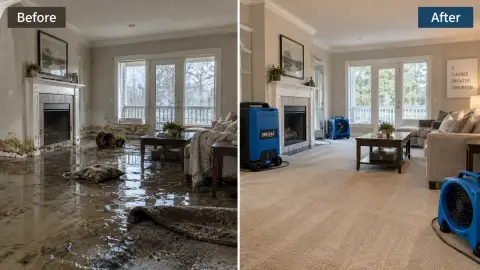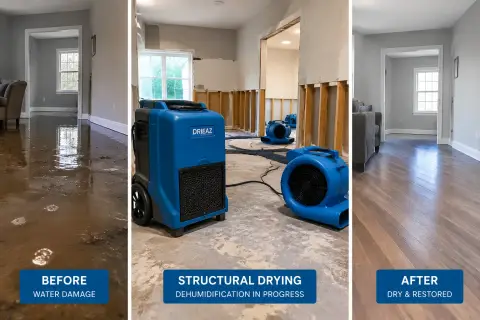
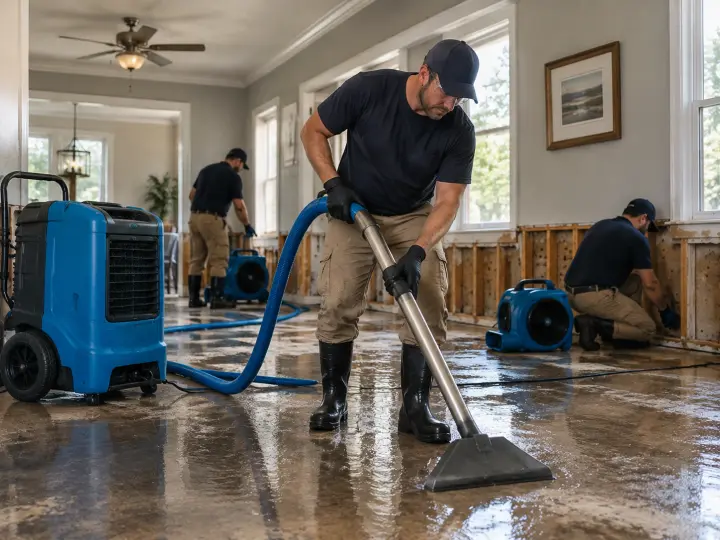
Located in St. Lucie County, Port St. Lucie is a waterfront community of roughly 205,000 residents. Port St. Lucie is one of the fastest-growing cities in Florida, laid out on a huge grid of canals, swales, and residential lots. Water damage here follows the pattern of the area: waterfront homes on canals, rivers, and bays, often only a few feet above the water. When water gets into one of those buildings, the clock starts immediately, because Florida's warm, humid air lets mold begin growing in as little as 24 to 48 hours.
Port St. Lucie sits roughly 16 feet above sea level. If you are dealing with a leak, a flooded room, or storm damage in Port St. Lucie, call (305) 789-7628 any time, day or night. We serve 6 ZIP codes in Port St. Lucie and nearby communities such as Jensen Beach, Stuart, Fort Pierce, and Palm City, and we document every job with photos and moisture readings so your insurance claim has what it needs.
Why water damage happens in Port St. Lucie
Much of the city was platted in the 1960s and built out from the 1990s onward, so homes are mostly single-story slab construction on canal or swale-drained lots. A large share of insured losses here come from roof leaks, AC condensate, and rainwater ponding against slabs. Port St. Lucie in particular is a big, fast-grown city built on a grid of canals and drainage swales. That system works well until a tropical system dumps rain faster than it can drain, and then yards, garages, and slab-on-grade homes take on water.
Water damage in Port St. Lucie usually comes from a short list of causes. These are the ones to watch for:
- High tides and king tides that push water into low streets and yards
- Storm surge that overtops seawalls and enters lower floors and garages
- Rising groundwater and sewer or septic backups when the ground is saturated
- Flooding from heavy rain when canals, rivers, and drainage systems fill faster than they can drain
Storm and flood history in St. Lucie County
Port St. Lucie is exposed to the same storm and flood patterns that have affected all of St. Lucie County.
- Hurricane Frances (2004) hit the Treasure Coast with long-duration wind and rain.
- Hurricane Milton (2024) spawned tornadoes that hit the Fort Pierce area, and dumped heavy rain on the Treasure Coast.
- Hurricane Jeanne (2004) came ashore on Hutchinson Island near the St. Lucie–Martin line.
Common water damage situations in Port St. Lucie
Heavy rain overwhelms a canal- or swale-drained lot. Port St. Lucie's big grid of lots relies on swales and canals, and extreme rain can leave yards and garages under water.
A roof leaks after a storm or tornado. The Treasure Coast has been hit by hurricanes and tornado-producing storms, and roofs that have been patched or aged often leak.
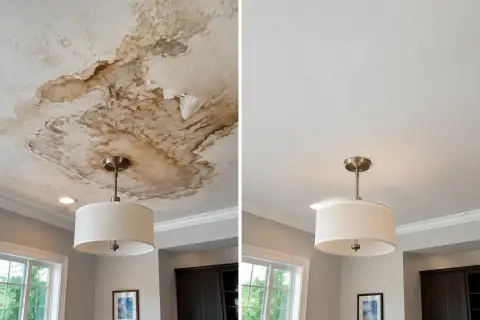
An AC condensate line overflows. Newer slab homes have attic air handlers, and clogged drains are a common cause of ceiling damage.
Where we work in Port St. Lucie
We work throughout Port St. Lucie, including areas near Tradition, Clover Park, the Port St. Lucie Botanical Gardens, Saints Community Park, and the North Fork St. Lucie River.
Crews responding in Port St. Lucie also cover the surrounding area, including Jensen Beach (about 8 miles east), Stuart (about 8 miles southeast), Fort Pierce (about 11 miles north), Palm City (about 9 miles southeast), and Indiantown (about 19 miles southwest).
Port St. Lucie is close to the Indian River Lagoon, the St. Lucie River, and Fort Pierce Inlet, and that water shapes local risk: tides, rain, and river or canal levels decide how quickly streets and yards flood.
ZIP codes we serve in Port St. Lucie
- 34952
- 34953
- 34983
- 34984
- 34986
- 34987